
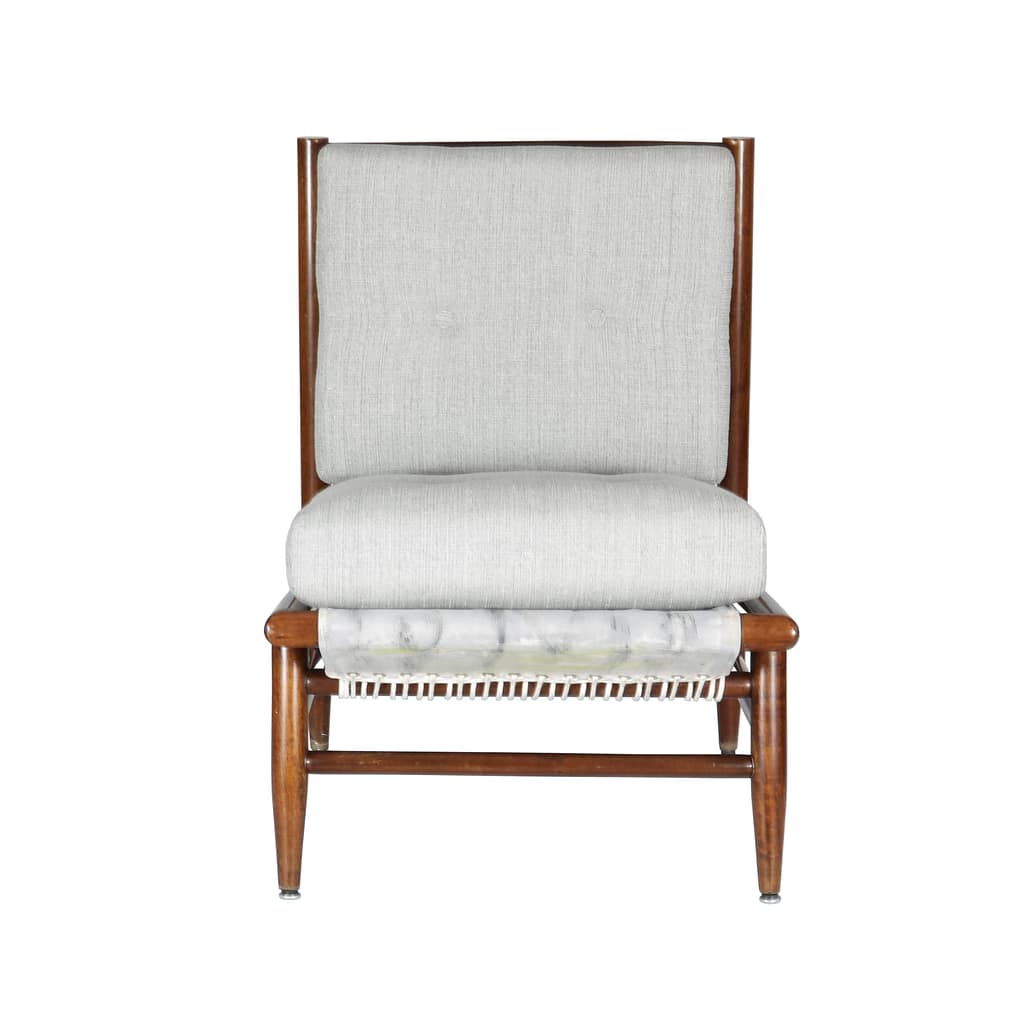
Joaquim Tenreiro
lounge chair, 1950´s – Brazil
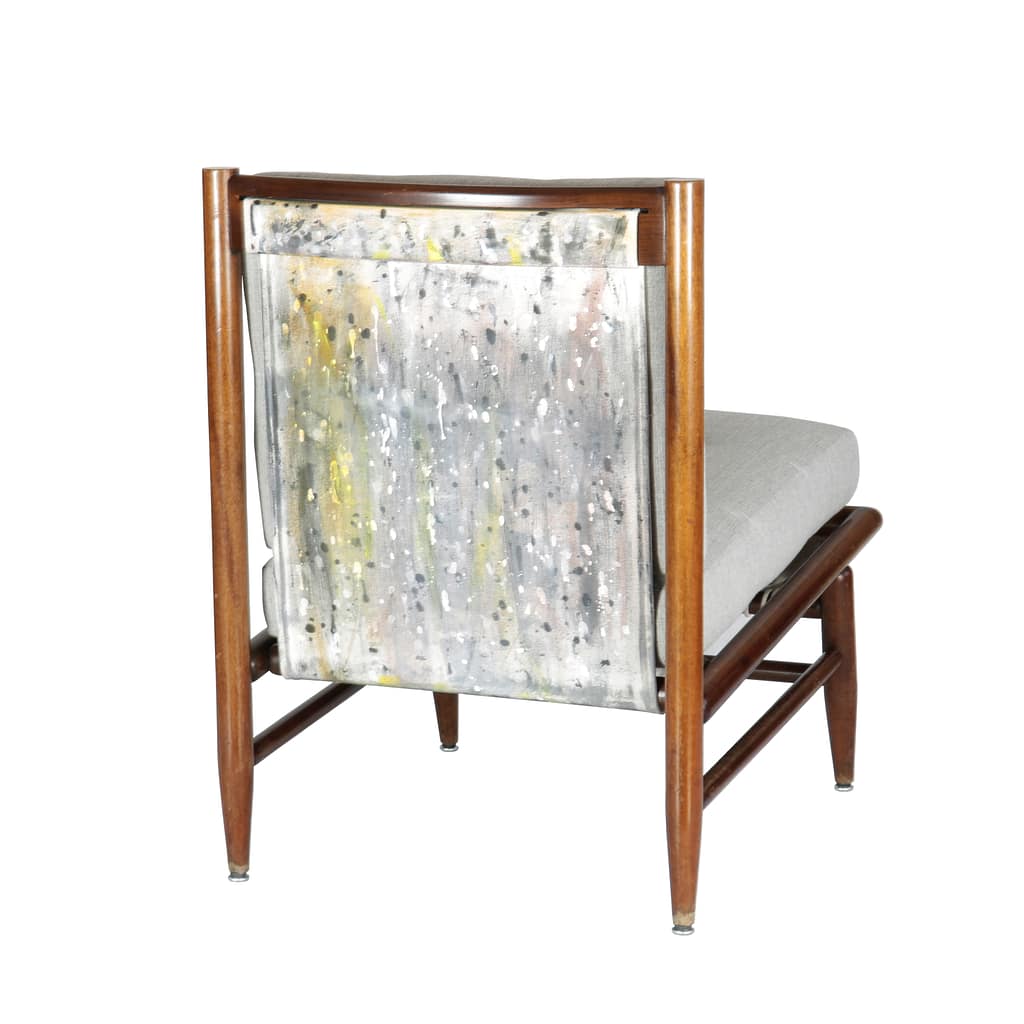
grey linen, hand-painted cotton, and Peroba wood.
01 unit
H 31,10 x L 22,44 x D 28,35 IN
____________________
poltrona, anos 1950 – Brasil
linho cinza, algodão pintado à mão e madeira Peroba
01 unidade
A 79 x C 57 x P 72 CM
Lightness as Structure
In this singular work, the structural intelligence of the hammock seems to find a modern expression in Joaquim Tenreiro’s design.
In this armchair, Tenreiro does not conceive lightness merely as an appearance. He embeds it in the construction itself.
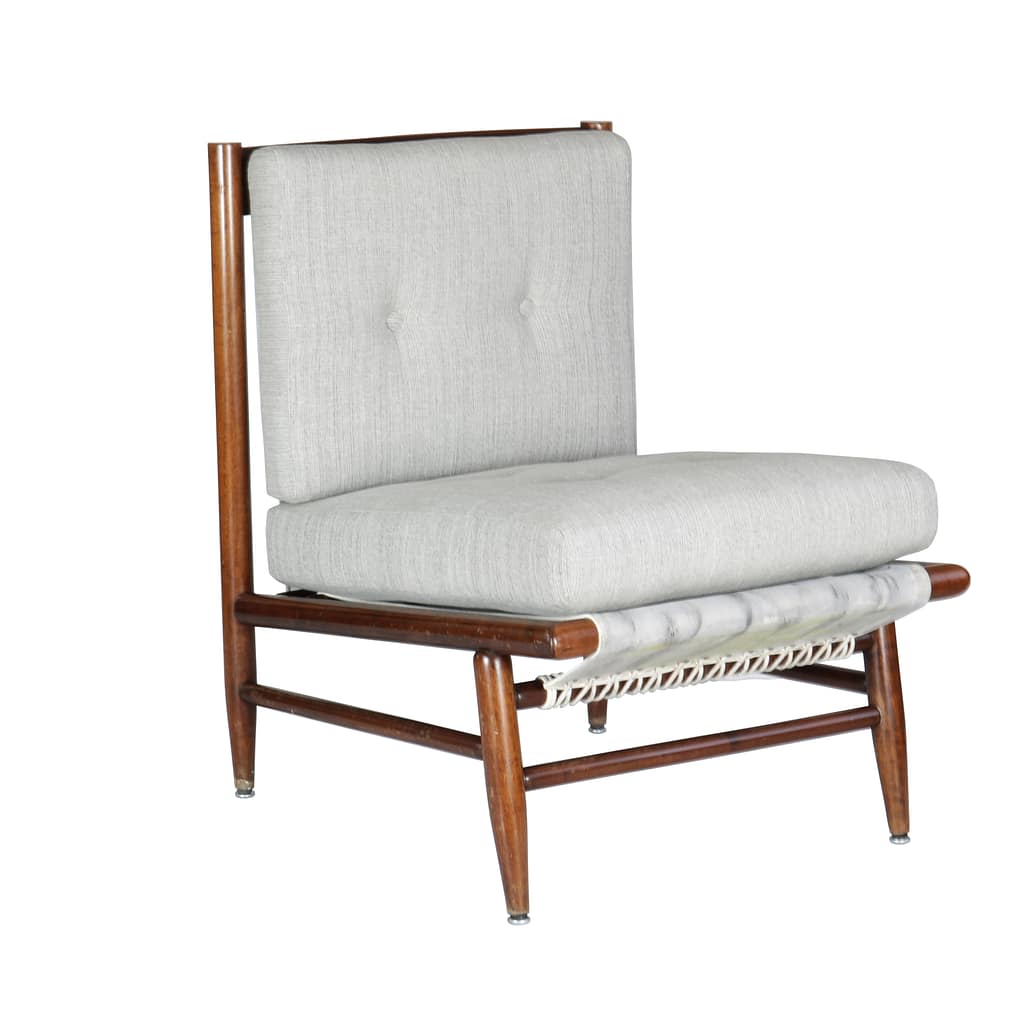
A slender structure in Brazilian hardwood defines the piece without enclosing it. Within the frame, a tensioned canvas runs continuously beneath the seat and through the backrest, suspended over rounded rails and secured with cord at the front. The cushions rest upon this flexible surface.
The construction remains legible. Wood, canvas and cord do not conceal how the armchair supports itself. On the contrary, each element reveals its function and becomes part of the design. The rigidity of the wood meets the flexibility of the canvas; tension bears the weight; the cushions provide the final point of contact with the body.
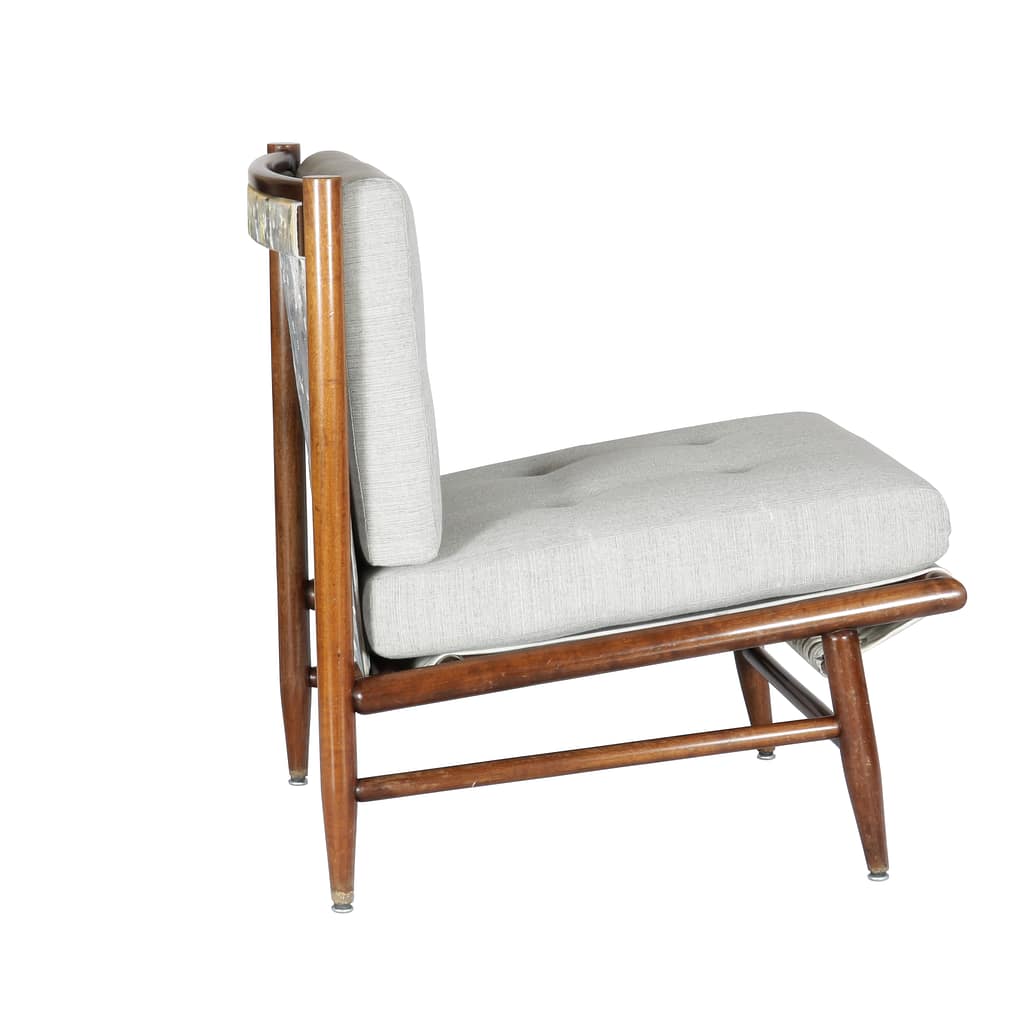
Seen from the side, this logic becomes even more apparent. Rather than concentrating material, Tenreiro works with intervals, points of support and suspension. The void is not a consequence of the structure; it is part of it.
This reflects a way of understanding Brazilian modernity that runs throughout Joaquim Tenreiro’s work: reducing weight without diminishing presence, finding structural possibilities within the inherent properties of materials, and making the relationship between structure and body part of the language of furniture.
Exhibition:
BS Galleria, Sao Paulo, Brazil, 2024
about Joaquim Tenreiro
….
A leveza como estrutura
Nesta obra singular, a inteligência construtiva da rede parece encontrar uma expressão moderna no desenho de Joaquim Tenreiro.
Nesta poltrona, Tenreiro não desenha a leveza apenas como aparência. Ele a incorpora à própria construção.
A estrutura esbelta em madeira nobre brasileira delimita a peça sem encerrá-la. Entre seus elementos, uma lona tensionada atravessa assento e encosto, suspensa sobre travas arredondadas e presa por corda na parte frontal. É sobre essa superfície flexível que repousam as almofadas.
A construção permanece legível. Madeira, lona e corda não procuram esconder como a poltrona se sustenta. Ao contrário, cada elemento revela sua função e participa do desenho. A rigidez da madeira encontra a flexibilidade da lona; a tensão recebe o peso; as almofadas fazem a aproximação final com o corpo.
Vista lateralmente, essa lógica torna-se ainda mais evidente. Em lugar de concentrar matéria, Tenreiro trabalha com intervalos, apoios e suspensão. O vazio não é consequência da estrutura: faz parte dela.
É uma maneira de compreender a modernidade brasileira que atravessa a obra de Joaquim Tenreiro: reduzir peso sem reduzir presença, encontrar possibilidades construtivas nas propriedades dos materiais e fazer da relação entre estrutura e corpo parte da linguagem do móvel.
Exposição:
BS Galleria, São Paulo, Brasil, 2024
sobre Joaquim Tenreiro
